
How Online Banks Offer Higher APYs Than Traditional Banks? The gap between interest rates at online banks and traditional banks remains striking in 2025.
While top online banks offer high yield savings accounts paying 4.00% to 5.00% APY, major traditional banks like Chase, Bank of America, and Wells Fargo pay around 0.01% to 0.50% on standard savings accounts. This difference amounts to 50 to 500 times more interest from online banks—a disparity so substantial it demands explanation.
Many consumers initially suspect online banks must be taking excessive risks or cutting corners on security to justify such dramatically higher returns. The reality is far more straightforward. Online banks simply operate with fundamentally different cost structures that allow them to share more of their profits with depositors while maintaining identical safety standards through FDIC insurance.
The Foundation: Drastically Lower Overhead Costs
Traditional banks maintain expensive physical infrastructure that online banks completely eliminate. Branch networks represent enormous ongoing expenses that directly impact how much banks can afford to pay depositors.
A typical bank branch requires leasing or purchasing real estate in convenient locations where property costs run high.
Each branch needs regular maintenance, utilities including electricity and heating, insurance coverage, security systems, and periodic renovations to stay competitive. These facilities also require furniture, computers, safes, ATMs, and other equipment that must be updated regularly.
The Human Cost of Branch Banking
Beyond physical infrastructure, traditional banks employ a lot of staff at each branch location. Tellers, personal bankers, branch managers, security personnel, and support staff all draw salaries and benefits. A single branch might employ 10 to 20 people, with larger locations requiring even more staff.
Generally speaking, bank branches are open Monday through Friday during business hours, with many also having Saturday hours.
Regular shifts from full-time personnel are necessary for this timetable. The true cost of each employee is significantly raised above base pay by benefits packages that include paid time off, retirement contributions, health insurance, and other comforts.
Quantifying the Savings
Industry analysis reveals that physical branches represent the single largest operating expense for traditional banks. The average bank branch costs approximately $200,000 to $400,000 annually to operate when accounting for all factors—real estate, utilities, maintenance, staffing, equipment, and incidental costs.
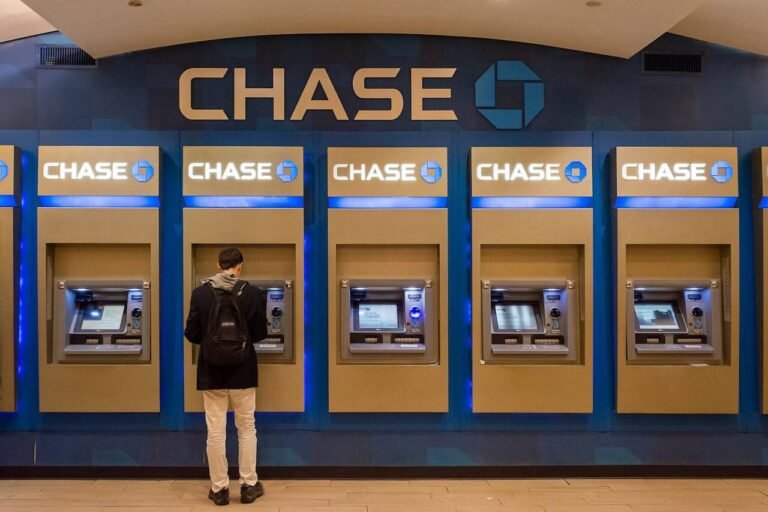
Large national banks maintain thousands of branches. Chase operates over 4,700 branches across the United States. Bank of America maintains roughly 3,900 branches. Wells Fargo has approximately 4,300 branch locations. The combined annual operating costs reach billions of dollars.
How Online Banks Eliminate These Expenses
Online banks function entirely through digital platforms accessed via websites and mobile applications. They might maintain a single corporate headquarters with centralized operations, but they don’t open branch networks accessible to the public.
This operational model eliminates the vast majority of expenses that traditional banks face. No branch leases, no branch utilities, no branch maintenance, no teller staffing, no branch security systems, and no branch equipment purchases. The savings accumulate to staggering amounts that online banks can redirect elsewhere.
Redirecting Savings to Depositors
Online banks face a fundamental business challenge: attracting customers without physical presence or established brand recognition. They cannot rely on convenient locations drawing foot traffic or generations of family banking relationships creating loyalty.
Interest rates become the primary competitive tool. By offering substantially higher APYs on savings accounts, online banks create compelling reasons for customers to overcome hesitation about online-only banking. The higher rates serve as effective marketing expenditures that drive customer acquisition and deposit growth.
The Marketing Cost Tradeoff
Traditional banks spend heavily on marketing through television commercials, billboard advertising, sponsorships, and other brand-building activities. These marketing budgets run into hundreds of millions annually for major institutions.
Online banks also market themselves but often choose to invest in higher deposit rates rather than expensive advertising campaigns. A bank paying an extra 3.50% APY compared to traditional competitors effectively spends that differential as customer acquisition cost—but only on customers who actually deposit money, making it highly targeted spending.
The Business Model Makes Sense
Higher savings rates don’t mean online banks operate as charities or sacrifice profitability. They simply structure their business models differently to remain competitive and profitable while sharing more earnings with customers.
Banks make money primarily through net interest margin—the spread between what they pay depositors and what they charge borrowers. An online bank might pay 4.50% on deposits while charging 7.50% on personal loans, earning a 3.00% spread. This margin provides substantial profit even after operational costs.
Lower Costs Mean Competitive Margins
Traditional banks might only pay 0.50% on savings while charging similar lending rates around 7.50%, creating a 7.00% spread. While this wider margin seems advantageous, their higher operational costs consume much of the difference.
Online banks with dramatically lower overhead achieve healthy profitability on narrower spreads. They can afford to pay depositors more while charging borrowers competitive rates, differentiating themselves on both sides of the business.
Technology as an Enabler
The rise of online banks became possible only through technological advancement. Reliable internet access, secure transaction processing, mobile banking applications, and digital identity verification systems all needed to mature before purely online banking could function effectively.
These technologies now exist as stable, secure platforms. Encryption protects sensitive data. Multi-factor authentication prevents unauthorized access. Mobile apps provide user-friendly interfaces for managing accounts. Remote check deposit allows customers to deposit checks via smartphone photos. Digital payment systems facilitate transfers between institutions.
Reduced Technology Costs Over Time
Paradoxically, while online banks rely heavily on technology, their technology costs remain substantially lower than traditional banks’ total expenses. Software development, server maintenance, cybersecurity measures, and app development cost significantly less than maintaining branch networks.
Technology investments also scale efficiently. Building a mobile app serves one million users as easily as 10,000 users with minimal additional cost. Opening branch number 1,001 costs nearly as much as opening branch one. This scaling advantage strengthens as online banks grow.
Competitive Pressure Maintains Rates
Online banks compete intensely with each other, creating a market dynamic that keeps rates high. With dozens of online banks vying for deposits, no single institution can drastically cut rates without losing customers to competitors.
This competition benefits consumers. If one bank drops its APY from 4.50% to 3.50%, customers can easily move money to competitors still offering 4.50%. The friction of switching online accounts remains low—no need to visit branches or manage complex relationship banking. Customers monitor rates and move money to maximize returns.
Rate Shopping Tools Increase Transparency
Comparison websites and financial media regularly publish rankings of the best high yield savings account rates. This transparency makes it difficult for any bank to maintain uncompetitive rates without consequences. Customers quickly identify better options and switch accounts accordingly.
Traditional banks benefit from higher customer inertia. People maintain accounts at physical banks due to convenience, established relationships, linked services, and simple reluctance to change. Online banks don’t enjoy these advantages, so they must keep rates competitive to retain deposits.
Customer Service Efficiency
Contrary to common assumptions, customer service at online banks often matches or exceeds traditional banks despite the lack of in-person interactions. Online banks invest heavily in telephone support, live chat systems, email support, and comprehensive self-service tools.
Many online banks provide 24/7 customer service, offering greater availability than traditional branch hours. Phone representatives typically answer quickly, and live chat provides immediate responses to common questions. Well-designed help centers and FAQs resolve many issues without any human interaction needed.
Technology Improves Support Quality
Customer relationship management systems allow online bank representatives to quickly access complete account histories and provide personalized assistance. Chatbots handle routine inquiries instantly, freeing human staff for complex issues. This technological support infrastructure operates at lower cost than maintaining branch staff everywhere.
When calculating return on investment for customer service, online banks spend less per customer interaction while often delivering faster, more convenient support. The absence of branches doesn’t translate to absent customer service—just different delivery methods.
Regulatory Compliance Remains Identical
Some consumers worry that online banks operate under different rules allowing riskier practices that enable higher rates. This concern is unfounded. Online banks face identical federal regulations as traditional banks.
The Office of the Comptroller of the Currency regulates national banks regardless of their business model. State banking departments supervise state-chartered banks. The Federal Reserve oversees the banking system broadly. All legitimate online banks maintain FDIC insurance protecting deposits up to $250,000 per depositor, per institution—the same coverage traditional banks provide.
Capital Requirements Apply Equally
Federal regulations require all banks to maintain specific capital ratios ensuring they can absorb losses without failing. These requirements apply uniformly to online and traditional banks. The lack of physical branches doesn’t exempt online banks from maintaining adequate capital reserves.
Safety regulators examine banks regularly, reviewing lending practices, capital adequacy, liquidity management, and risk controls. Online banks undergo the same rigorous examination processes as traditional institutions. Higher savings rates don’t indicate relaxed regulatory oversight.
Understanding the Economics Long-Term
The structural cost advantages online banks enjoy remain durable. As long as they maintain digital-only operations, they’ll continue saving substantially on overhead compared to branch-based competitors. These savings create permanent capacity to pay higher deposit rates.
However, absolute rate levels fluctuate with Federal Reserve policy. When the Fed cuts interest rates, online bank savings rates decline alongside traditional bank rates. The gap typically persists, online banks continue paying more, but both move in the same direction based on broader monetary policy.
Calculating What Higher Rates Mean
To understand the practical impact of rate differences, consider a realistic scenario using a high yield savings account calculator. A saver maintaining $15,000 in an account earning 4.50% APY for one year accumulates approximately $15,675. The same balance at 0.50% APY reaches only $15,075. The high yield account generates $600 more in earnings annually.
Over five years with consistent $200 monthly contributions, the account at 4.50% APY grows to approximately $29,750. At 0.50% APY, the balance reaches roughly $27,300. The difference of $2,450 represents real purchasing power lost to inferior rates—money that could fund a vacation, reduce debt, or boost other financial goals.
Why Traditional Banks Don’t Match Rates
Given that online banks successfully offer higher rates while remaining profitable, why don’t traditional banks simply match them? The answer involves strategic choices and structural constraints.
Traditional banks invested billions in branch networks over decades. Abandoning this infrastructure isn’t financially viable—the sunk costs can’t be recovered. Banks must optimize the assets they possess rather than writing them off entirely.
Different Value Propositions
Traditional banks position themselves as full-service financial partners providing comprehensive products, personalized advice, and convenient access. They bundle checking, savings, credit cards, mortgages, investment services, and business banking under one roof with coordinated service.
This integrated approach appeals to customers valuing relationships and complexity management over maximizing returns on individual products. Traditional banks calculate they can maintain profitable customer relationships even while paying low savings rates because customers derive value from other services.
The Best of Both Worlds Strategy
Many financially savvy individuals use both online and traditional banks simultaneously, leveraging each for its strengths. They maintain checking accounts at traditional banks for convenient branch access, ATM networks, and services like cashier’s checks or notary services. They park savings in online high yield accounts to maximize interest earnings.
This hybrid approach requires managing accounts at multiple institutions but captures meaningful benefits. The extra interest from high yield accounts substantially exceeds any inconvenience from maintaining two banking relationships. Linking accounts enables easy transfers between institutions within one to three business days.
Evaluating Your Priorities
Choosing between online and traditional banks ultimately depends on personal priorities. If maximizing returns on savings ranks high and you’re comfortable with digital banking, online banks clearly deliver superior results. The rate differential is too substantial to ignore for financially conscious savers.
If in-person service, integrated financial products, and established relationships matter more than interest rate optimization, traditional banks might better fit your needs despite lower returns. Many people find that mixing both approaches provides optimal results—using each type of institution for what it does best.
The Bottom Line
Online banks have permanently altered the banking landscape. Traditional banks cannot ignore their competition and have responded by improving digital platforms, though most continue paying uncompetitive savings rates. The structural cost differences ensure online banks maintain rate advantages for the foreseeable future.
Younger customers especially gravitate toward online banks. Digital natives comfortable managing finances through apps don’t perceive online-only banking as limitation. As this demographic grows, online banks will likely capture increasing market share.
Traditional banks will continue serving customers valuing branch access and comprehensive services, but the days of paying near-zero rates on savings while customers simply accept it appear numbered. The transparency and competition online banks introduced benefits all consumers by raising baseline expectations for what banks should offer depositors.